
How each is built
Stamped concrete is one continuous slab, textured and colored while it's still workable, with control joints cut or tooled in so cracking happens where it's planned. Pavers are individual units set on a prepared base, with joints between every piece and an edge restraint holding them in place.
What that means day to day
- Look: stamped concrete reads as one surface with a pattern; pavers show every joint.
- Joints: pavers have many joints that can grow weeds or shift; stamped concrete has fewer, planned joints.
- Future changes: individual pavers can be lifted for access underneath and relaid; stamped concrete is cut and patched, and a patch may not match exactly.
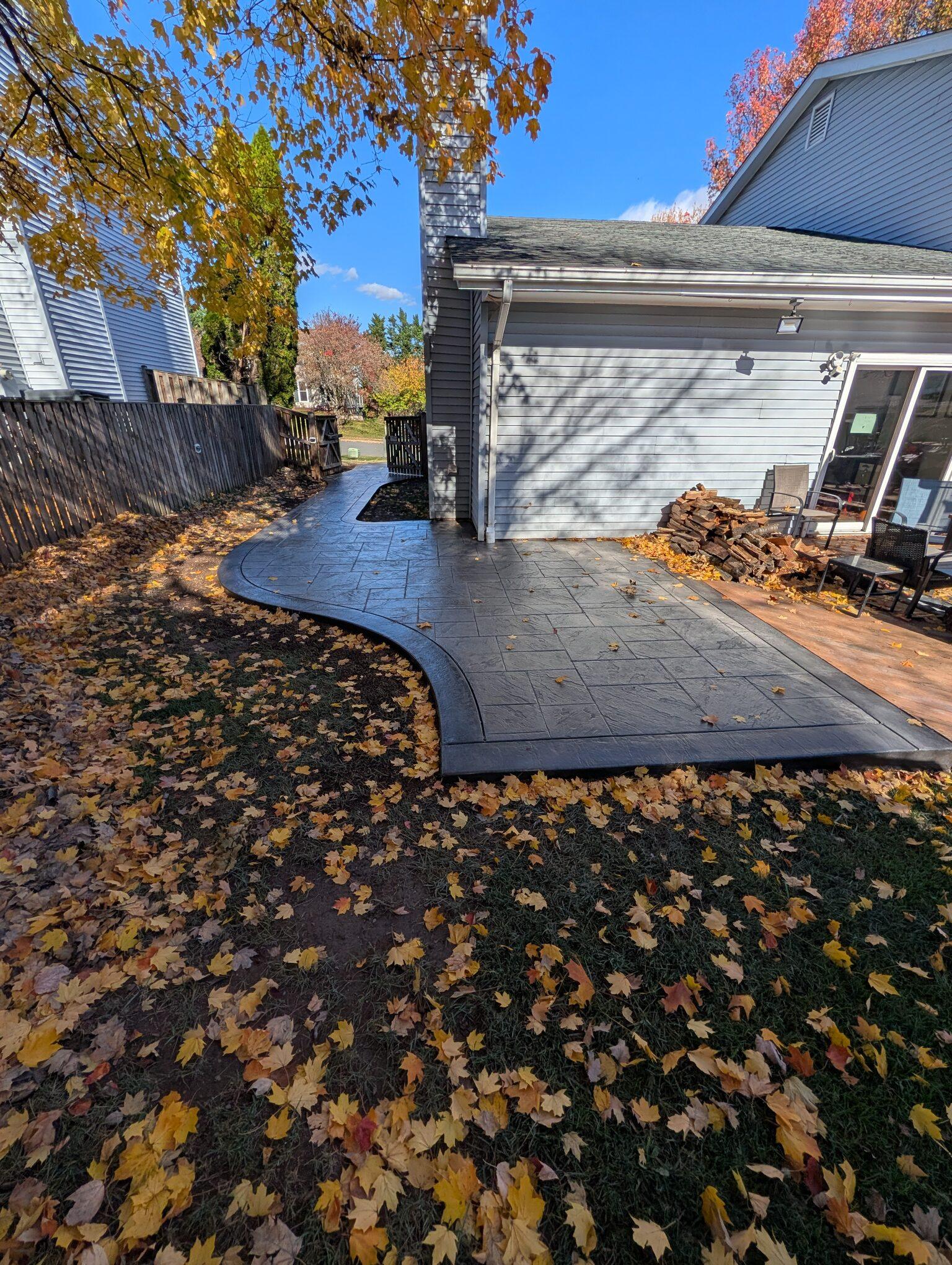
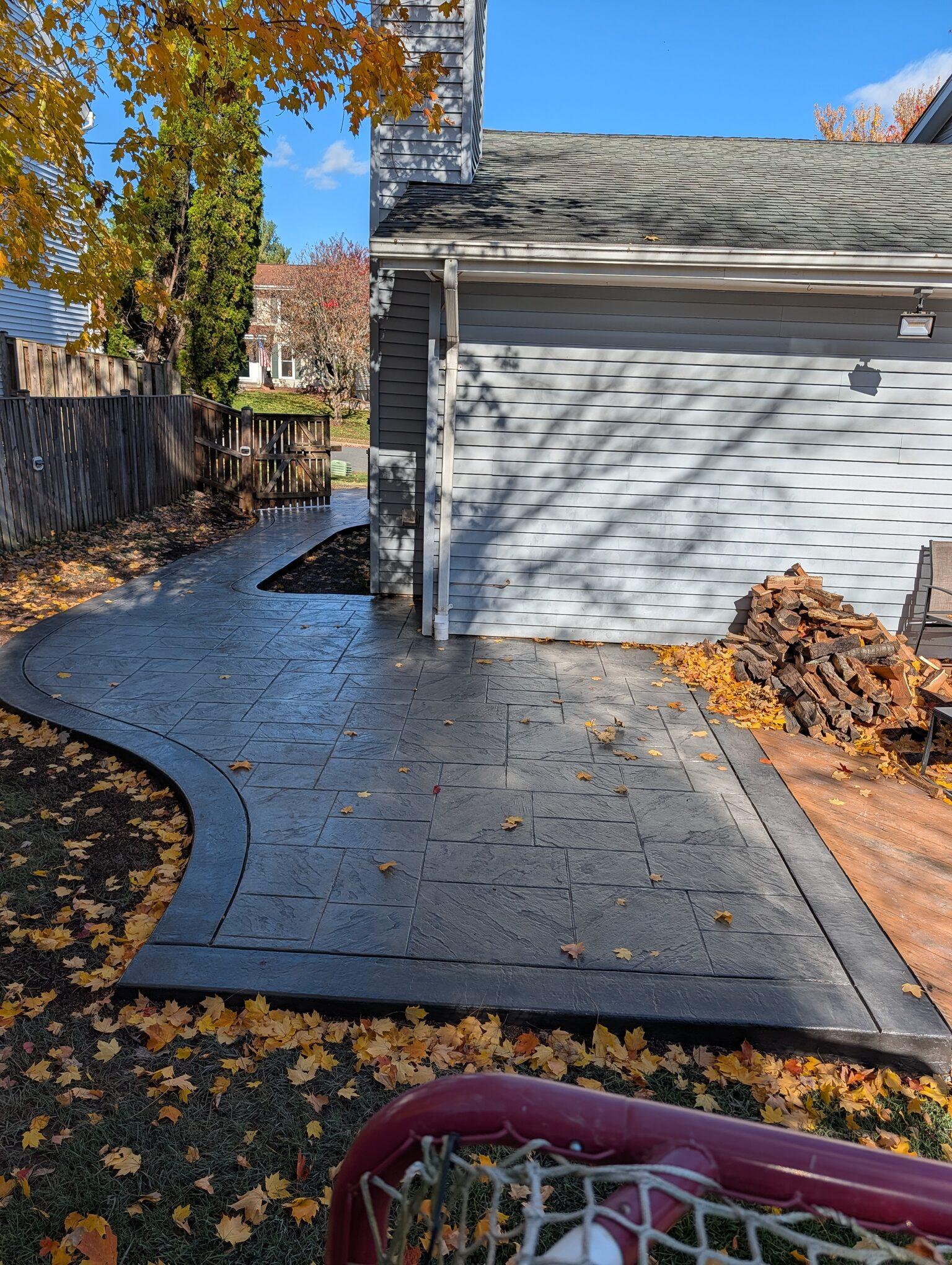
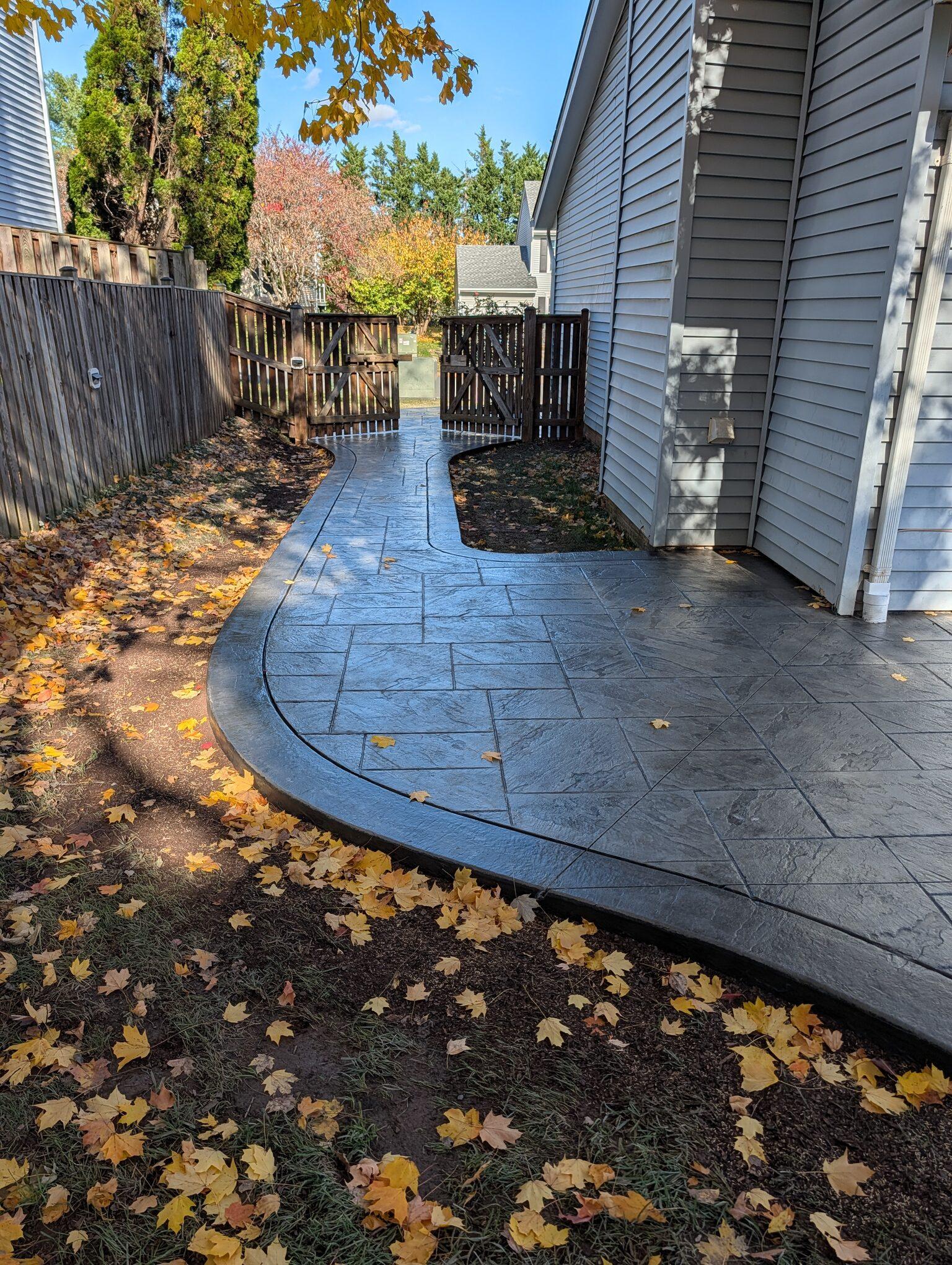
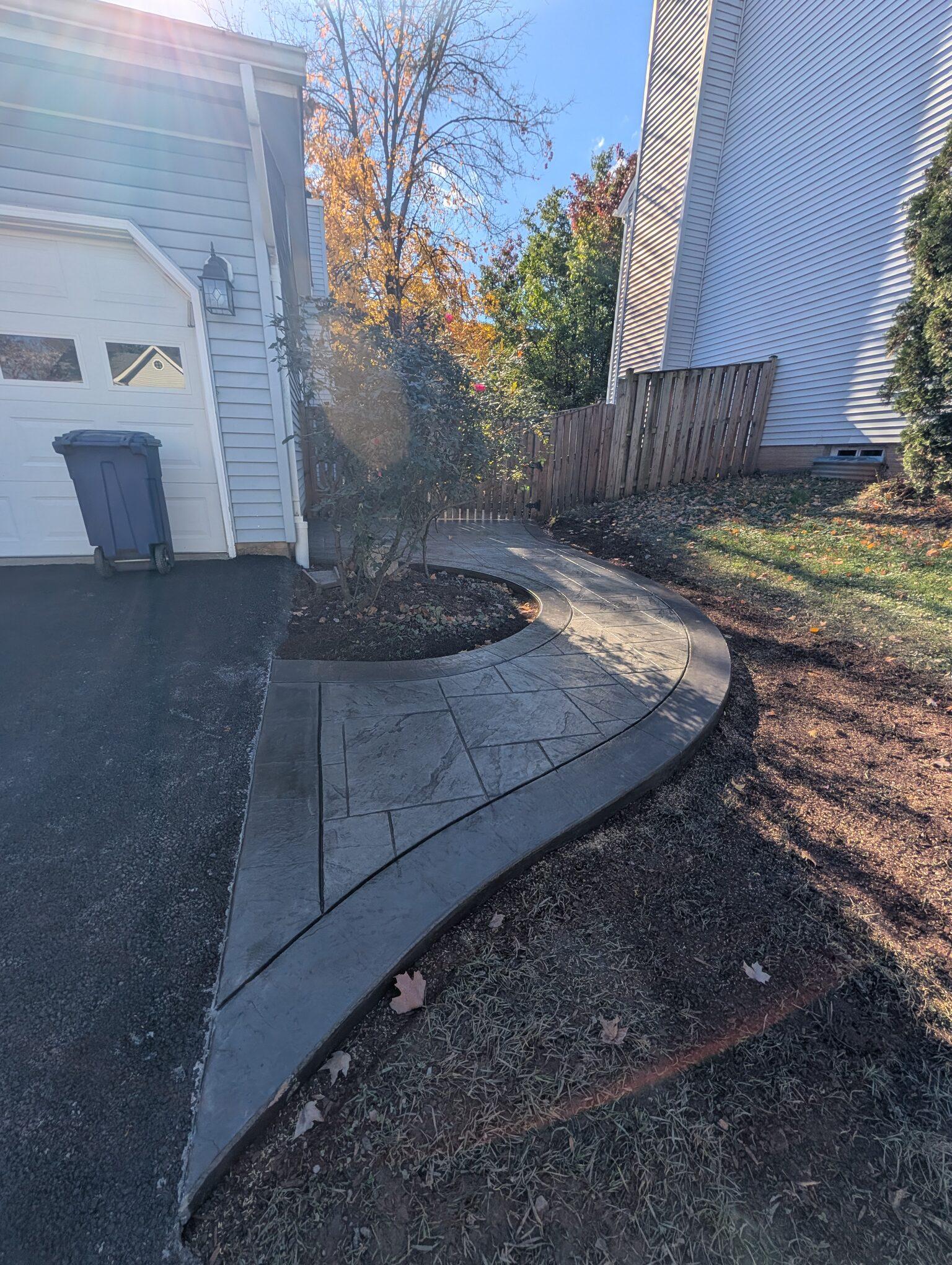
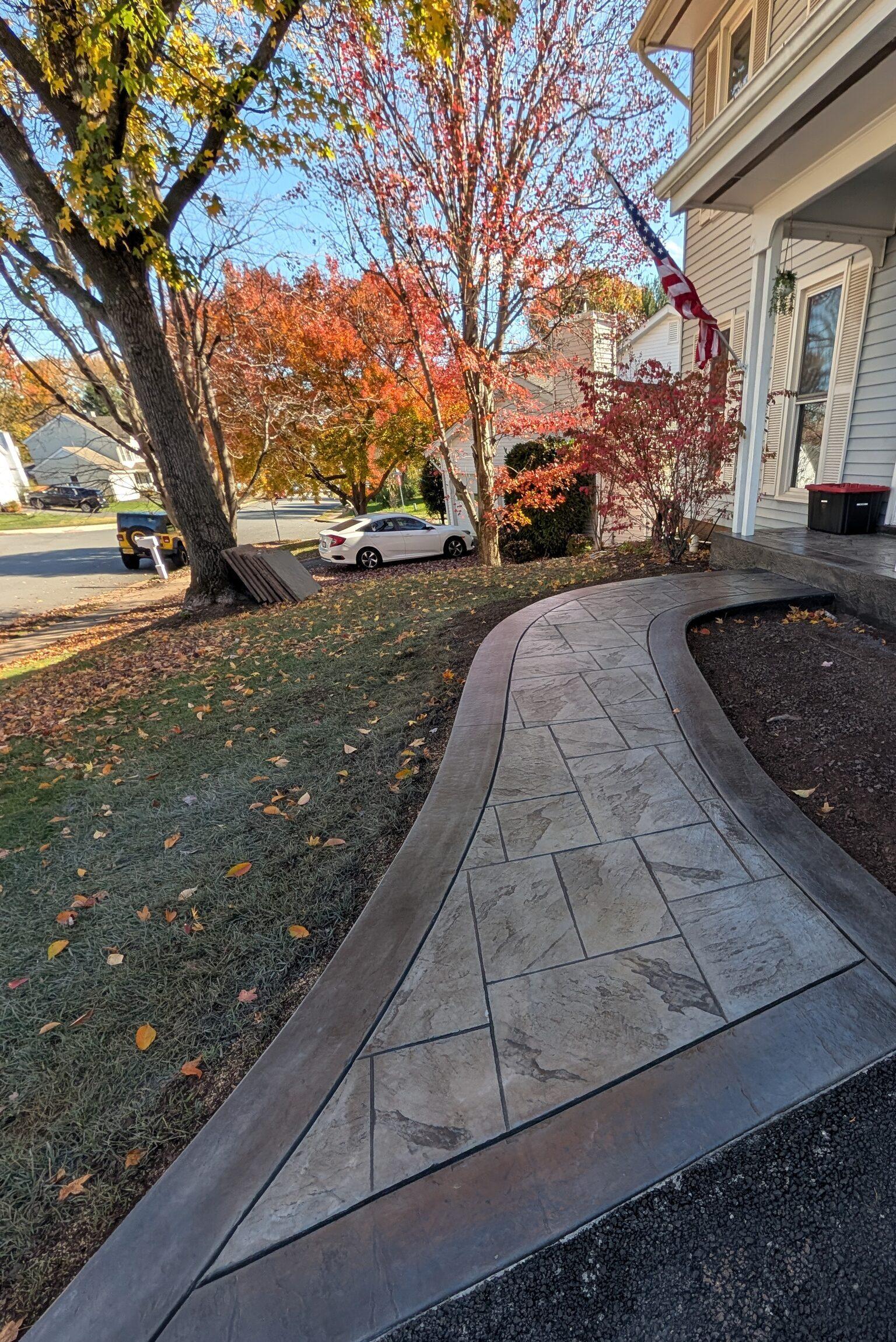
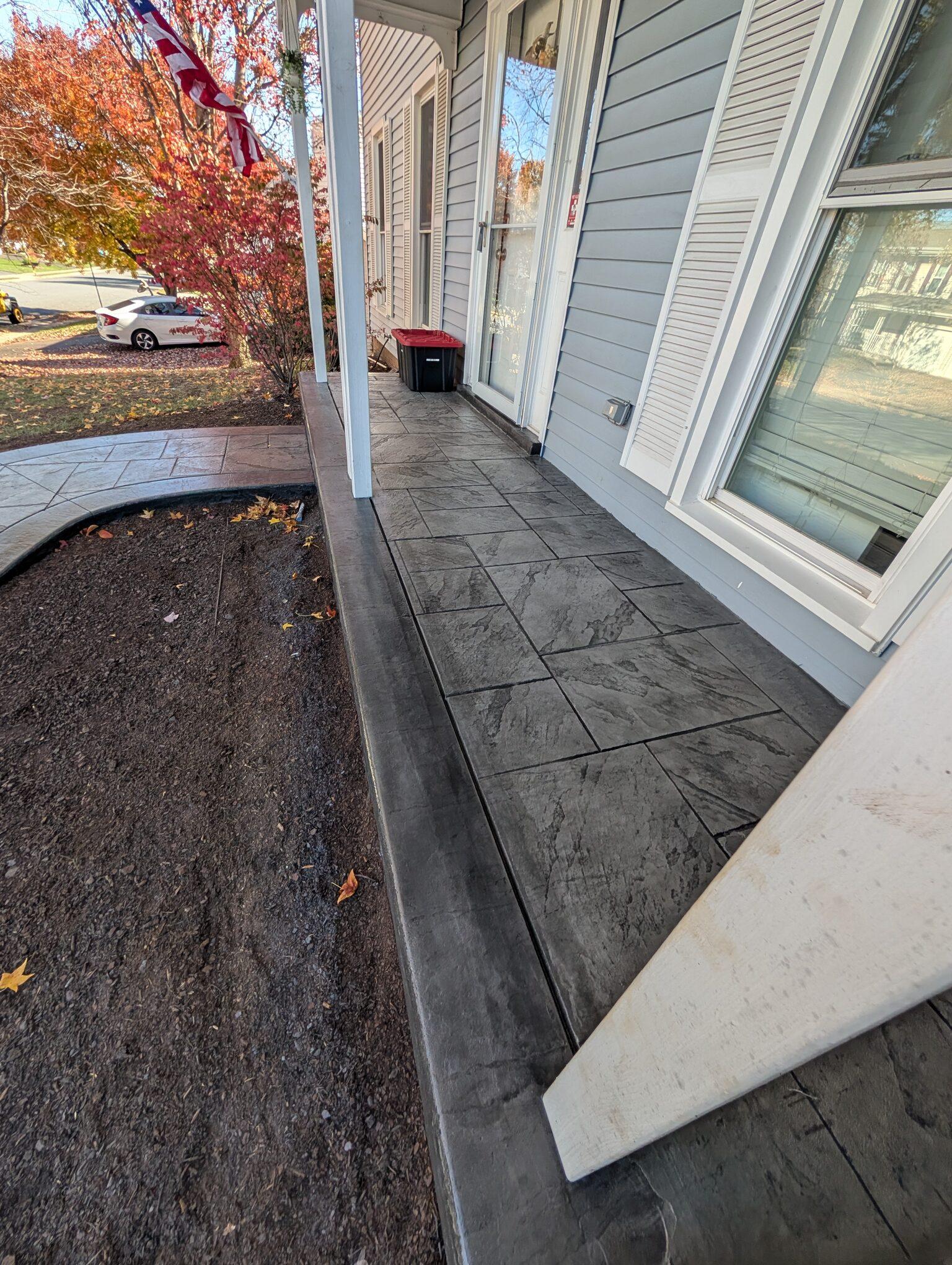
- Curves and borders: both can curve; stamped concrete can carry a contrasting border in the same pour, as on our November Herndon project.
- Upkeep: stamped concrete is typically resealed periodically to protect color and surface; paver joints may need refilling.
Questions to decide with
- Will you need access under this area later, for utilities or drainage?
- Do you want the surface to read as one continuous piece?
- Does your HOA have rules on materials or colors?
- How will it meet your existing driveway, steps or deck?
Concrete Commander installs stamped concrete. If pavers turn out to be the better fit for how you'll use the space, we'd rather tell you than talk you out of it.
Is stamped concrete cheaper than pavers?▸
It depends on the size, layout, base work and finish. We don't publish prices; we give a written number after seeing the site.
Will stamped concrete crack?▸
Concrete can crack. Control joints are placed so cracking happens along planned lines, and good base preparation and drainage reduce the risk.